

Environmental regulations and sustainability initiatives are reshaping industrial manufacturing across every sector, and printed circuit board materials are no exception. The electronics industry is undergoing a significant transition as manufacturers and their customers increasingly demand halogen-free materials that reduce environmental impact without sacrificing performance. This shift represents both an opportunity and a challenge for Industrial Pcb applications, where reliability under demanding conditions remains paramount.
Halogenated materials—particularly those containing bromine as flame retardants—have served the electronics industry well for decades, providing reliable fire protection at reasonable cost. However, growing concerns about environmental impact, recycling challenges, and potential health effects are driving adoption of halogen-free alternatives. Understanding the benefits and trade-offs of halogen-free materials helps engineers make informed decisions that balance environmental responsibility with the performance requirements industrial applications demand.
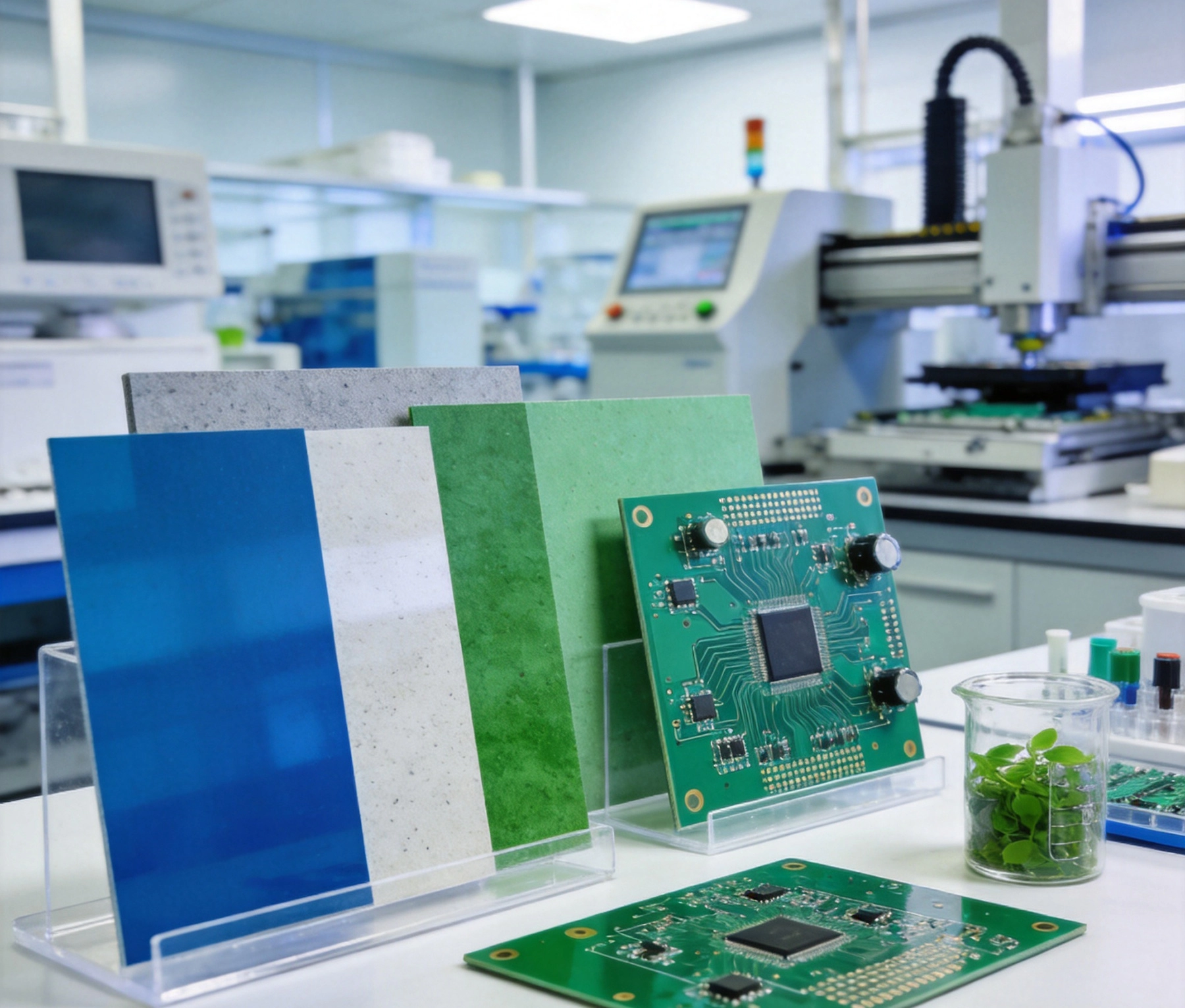
Halogen-free Pcb Materials eliminate brominated and chlorinated flame retardants that traditional laminates use for fire safety. Understanding why these materials exist requires examining both the regulations driving adoption and the material science underlying flame retardancy.
Traditional FR4 laminates typically contain brominated epoxy resins or tetrabromobisphenol-A (TBBPA) as flame retardants. These halogenated compounds release bromine or chlorine radicals during combustion, interrupting the chemical reactions that sustain fire. This mechanism provides effective flame suppression at relatively low material concentrations.
Halogen-free materials achieve flame retardancy through different chemical mechanisms. Phosphorus-based compounds, nitrogen-containing resins, and metal hydroxides create protective char layers or release water vapor during heating, cooling the material and suppressing combustion. These alternative mechanisms require different material loadings and affect laminate properties differently than traditional halogenated approaches.
Multiple regulatory frameworks drive halogen-free adoption. The European Union's Restriction of Hazardous Substances (RoHS) directive restricts certain substances in electronics but currently does not ban brominated flame retardants specifically. However, customer requirements and voluntary standards increasingly demand halogen-free materials, particularly for consumer electronics and products marketed as environmentally responsible.
Waste electrical and electronic equipment (WEEE) regulations encourage halogen-free materials to simplify recycling and reduce hazardous content in landfills. When halogenated materials burn during recycling processing, they can release corrosive and toxic compounds. Halogen-free materials avoid these complications, enabling simpler recycling processes and more environmentally responsible disposal.
The environmental advantages of halogen-free materials extend beyond simple substance restrictions to encompass the entire product lifecycle.
Halogen-free material processing generally creates safer working conditions. Traditional brominated flame retardants can release volatile brominated compounds during high-temperature processing, potentially exposing workers to hazardous substances. Halogen-free alternatives typically release fewer hazardous volatiles during fabrication, improving factory safety profiles.
Reduced hazardous substance content simplifies waste handling and disposal. Manufacturing scrap from halogen-free production can often be recycled more readily than halogenated material waste. This recyclability reduces the environmental footprint of PCB production and supports circular economy initiatives that are gaining regulatory and customer attention globally.
Product end-of-life represents a critical environmental consideration for Industrial Electronics. Equipment with halogenated materials requires careful handling during disposal to prevent release of hazardous compounds. Incineration of halogenated materials can release dioxins and furans—highly toxic compounds that regulatory frameworks increasingly restrict.
Halogen-free materials avoid these disposal complications. When burned under controlled conditions, phosphorus-based and nitrogen-based flame retardants produce fewer hazardous byproducts than halogenated alternatives. This characteristic simplifies compliance with evolving end-of-life regulations and supports sustainable product stewardship programs that industrial manufacturers increasingly adopt.
Customer demand for environmentally responsible products drives halogen-free adoption beyond regulatory requirements. Industrial equipment buyers increasingly specify halogen-free materials as part of sustainability procurement requirements. Products using halogen-free materials can carry environmental certifications that influence purchasing decisions in environmentally conscious market segments.
Brand reputation benefits from demonstrated environmental responsibility. Manufacturers who proactively adopt halogen-free materials signal commitment to sustainability that resonates with customers, investors, and regulatory agencies. This reputation value may exceed direct material cost considerations, particularly for companies with strong sustainability positioning in their markets.
Halogen-free materials must meet demanding performance requirements for industrial applications. Understanding their characteristics helps engineers select appropriate materials for specific requirements.
Thermal performance represents a critical consideration for Industrial Pcb materials. Glass Transition Temperature (Tg) defines the upper service temperature limit, above which material properties degrade significantly. Modern halogen-free materials achieve Tg values comparable to traditional FR4, typically ranging from 130°C to 180°C depending on formulation.
Decomposition temperature (Td) indicates thermal stability during high-temperature processing. Halogen-free materials generally show competitive Td values, though specific formulations may differ. Lead-free Soldering processes, which require higher reflow temperatures than traditional tin-lead soldering, demand materials with adequate thermal stability that halogen-free options can provide.
Mechanical Strength and flexibility affect Pcb Reliability during assembly and service. Halogen-free materials demonstrate comparable flexural strength to traditional laminates, maintaining structural integrity during handling and operational stress. However, specific formulations may show differences in modulus and elongation characteristics that affect performance in demanding applications.
Copper peel strength—the force required to separate copper foil from the laminate—directly impacts Solder Joint Reliability and long-term durability. Modern halogen-free materials achieve peel strength values meeting or exceeding traditional FR4 specifications, ensuring reliable bonding between conductors and substrate throughout product lifetime.
Electrical performance characteristics including Dielectric Constant (Dk) and dissipation factor (Df) affect Signal Integrity in high-frequency applications. Halogen-free materials offer Dk values in ranges suitable for most industrial applications, typically between 3.8 and 4.5 at 1MHz. These values meet requirements for standard digital and Power Electronics, though specialized high-frequency applications may need alternative materials.
Dissipation factor affects energy loss in AC applications. Halogen-free materials show competitive Df values compared to traditional FR4, generally remaining below 0.02 at 1MHz. For most industrial control and power applications, this dissipation factor introduces negligible signal degradation. High-speed digital applications with stringent Signal Integrity requirements may need materials with lower Df values available from specialized formulations.
Halogen-free materials present certain challenges that engineers must consider during Material Selection and design.
Halogen-free materials typically cost more than traditional halogenated alternatives. The premium varies by material type and supplier but generally ranges from 10% to 30% above equivalent halogenated products. This cost increase reflects more expensive raw materials, different manufacturing processes, and potentially lower production volumes that don't yet achieve the economics of scale of established halogenated materials.
For high-volume applications where material cost dominates, this premium may significantly impact product economics. For specialized industrial applications where reliability justifies premium pricing, halogen-free costs may be acceptable. Evaluating total cost of ownership—including potential regulatory compliance costs, recycling expenses, and customer relationship value—provides appropriate context for halogen-free investment decisions.
Halogen-free materials may require modified processing parameters compared to traditional laminates. Higher moisture absorption in some formulations necessitates careful handling and storage to prevent Delamination during assembly. Prebaking before processing may be required, adding cycle time and equipment requirements that affect production efficiency.
Drilling parameters may require adjustment for optimal hole quality. Halogen-free materials can exhibit different drilling behavior than traditional FR4, potentially requiring changes in feed rates, spindle speeds, and peck drilling sequences. Working with manufacturers experienced in halogen-free processing helps identify appropriate parameters without extensive trial and error.
The halogen-free materials market is less mature than traditional halogenated products, leading to greater variation between suppliers and formulations. Engineers selecting halogen-free materials should verify that specific products meet application requirements rather than assuming general category compatibility. Testing representative samples from production lots confirms that delivered materials match design assumptions.
Supplier qualification for halogen-free materials requires more extensive evaluation than traditional materials. Long-term availability should be confirmed, as some halogen-free formulations may be discontinued if market demand doesn't support continued production. Selecting materials from established suppliers with strong market positions reduces availability risk.
Halogen-free materials serve many industrial applications effectively, though certain applications warrant special consideration.
Industrial control systems, programmable logic controllers, and motor drives represent ideal applications for halogen-free materials. These products operate in demanding environments with temperature extremes, vibration, and electrical stress. Modern halogen-free materials meet these requirements while providing the environmental benefits that industrial equipment buyers increasingly demand.
Industrial Automation equipment often serves long-life applications where end-of-life considerations matter. Equipment expected to operate for 15-20 years benefits from materials that won't create disposal complications decades after installation. Halogen-free selection supports these extended lifecycle requirements while meeting current environmental expectations.
Power conversion equipment including inverters, converters, and power supplies operates under thermal and electrical stress that demands robust materials. Halogen-free materials with appropriate thermal ratings serve these applications effectively, though Material Selection should verify Thermal Cycling capability matches application requirements.
High-power applications generating significant heat benefit from materials with proven Thermal Management characteristics. Thermal Conductivity values for halogen-free materials generally match traditional alternatives, enabling efficient Heat Dissipation without design modifications. Power Electronics designers should verify thermal performance meets specific requirements for their applications.
Rail, automotive, and aerospace applications present demanding requirements that halogen-free materials can address. Environmental regulations in transportation sectors increasingly influence material selection, with halogen-free requirements appearing in supply chain specifications from major manufacturers. Meeting these requirements positions manufacturers for transportation market opportunities.
Transportation equipment undergoes extensive qualification testing that verifies material suitability. Halogen-free materials with established automotive or aerospace qualification histories provide confidence that qualification challenges can be addressed. Newer formulations may require additional qualification effort that affects program timing and cost.
Transitioning to halogen-free materials requires planning and coordination across design, procurement, and manufacturing functions.
Pcb Design for halogen-free materials doesn't differ significantly from traditional materials, but certain considerations merit attention. Moisture sensitivity level (MSL) ratings may differ from equivalent halogenated products, potentially requiring different handling and storage procedures. Assembly processes may need adjustment for specific material characteristics.
Design rule verification should confirm that halogen-free material properties match design assumptions. Trace width calculations, impedance control requirements, and Thermal Management provisions should be validated against actual material specifications. Working with material suppliers and manufacturers during design helps identify any adjustments needed for successful halogen-free implementation.
Supply chain qualification for halogen-free materials requires identifying approved sources, verifying specification compliance, and establishing procurement processes. Multiple qualified sources reduce supply risk and enable competitive pricing through source competition.
Inventory transition from halogenated to halogen-free materials requires coordination to avoid material mixing. Clear identification systems, segregated storage, and process controls prevent inadvertent use of incorrect materials. Quality management systems should address halogen-free specific requirements that existing procedures may not cover.
Manufacturing processes may require modification for halogen-free materials. Prebaking requirements, drilling parameter adjustments, and storage condition changes all affect manufacturing flow. Documenting adapted processes and training personnel ensures consistent execution.
Quality verification should confirm that halogen-free production meets specifications. Testing samples from initial production runs verifies that process adaptations achieve required results. Any defects or issues discovered during production require root cause analysis that considers material-specific factors that may not affect traditional materials.
The rise of halogen-free industrial Pcb Materials reflects broader industry trends toward environmental responsibility and sustainable manufacturing. These materials offer meaningful benefits including improved worker safety, simplified recycling, reduced hazardous content, and alignment with customer sustainability expectations. For many industrial applications, halogen-free materials provide performance meeting demanding requirements while supporting environmental objectives.
Trade-offs including higher cost, potential processing complexity, and material consistency considerations require careful evaluation. Not every application justifies halogen-free premium pricing, particularly for cost-sensitive products in less regulated markets. However, for industrial applications where environmental responsibility matters, where end-of-life considerations affect product lifecycle costs, or where customer requirements demand halogen-free materials, the trade-offs may be entirely appropriate.
Making informed decisions about halogen-free materials requires understanding both the benefits these materials provide and the challenges they present. Engineers who evaluate halogen-free options with appropriate context—considering application requirements, regulatory environment, customer expectations, and total cost of ownership—can determine whether halogen-free materials offer appropriate solutions for their specific requirements.
Halogen-free PCB materials eliminate brominated and chlorinated flame retardants that traditional FR4 laminates contain. These materials use alternative flame retardant mechanisms—typically phosphorus-based, nitrogen-based, or metal hydroxide compounds—that achieve flame retardancy without halogenated substances. Halogen-free materials must contain less than specified thresholds of bromine, chlorine, and other halogens to qualify for halogen-free classification.
Modern halogen-free materials offer reliability comparable to traditional halogenated laminates for most industrial applications. Thermal, mechanical, and electrical properties meet or exceed traditional FR4 specifications. Some early halogen-free formulations had performance limitations, but material technology has advanced significantly. Selecting materials from established suppliers with proven track records ensures reliable performance.
Halogen-free material cost premiums of 10-30% reflect more expensive raw materials, different manufacturing processes, and lower production volumes that don't yet achieve economies of scale of established halogenated products. Phosphorus-based and other alternative flame retardants cost more than brominated compounds. As halogen-free demand grows and production volumes increase, cost premiums may decrease.
Applications with strong environmental requirements, extended product lifecycles, or customer sustainability mandates benefit most from halogen-free materials. Industrial Automation equipment, transportation electronics, and products marketed as environmentally responsible commonly use halogen-free materials. Applications facing end-of-life disposal regulations or with long service lives particularly warrant halogen-free consideration.
Halogen-free materials may require modified handling and processing compared to traditional laminates. Higher moisture absorption in some formulations requires careful storage and possibly prebaking before assembly. Drilling parameters may need adjustment for optimal hole quality. Most established manufacturers have developed processes for halogen-free materials that address these differences.
A Comprehensive Guide to High-Tg Materials for Industrial PCBsMay/27/2026
A Comprehensive Guide to High-Tg Materials for Industrial PCBsJune/05/2026
Understanding CTE and Its Impact on Industrial PCB Materials SelectionJuly/18/2026
How to Select Industrial PCB Materials for High-Voltage ApplicationsSeptember/07/2026
FR-4 vs. Polyimide: Choosing the Right Industrial PCB MaterialsJuly/02/2026
SMT vs. Through-Hole: Best Practices for Industrial PCBAJuly/07/2026
The Impact of Surface Finishes on Industrial PCB Fabrication QualityJuly/16/2026
How to Scale Your Industrial PCB Production for Mass ManufacturingJune/02/2026