Open Nav


High-mix, low-volume (HMLV) manufacturing presents quality challenges that mass production simply doesn't face. When your production line assembles 50 different board designs in a month—each with unique components, layouts, and requirements—maintaining consistent quality requires fundamentally different approaches than producing thousands of identical units.
Industrial Electronics amplify these challenges. Industrial PCBs often operate in harsh environments, demand extended service lives, and serve critical applications where failure carries significant consequences. Quality isn't just a target; it's an absolute requirement for customer trust and business viability.
Successfully managing quality control in HMLV Industrial Pcba requires systematic processes, skilled personnel, flexible testing strategies, and robust documentation. Understanding how these elements work together enables manufacturers to deliver consistent quality despite the complexity inherent in diverse product mixes.
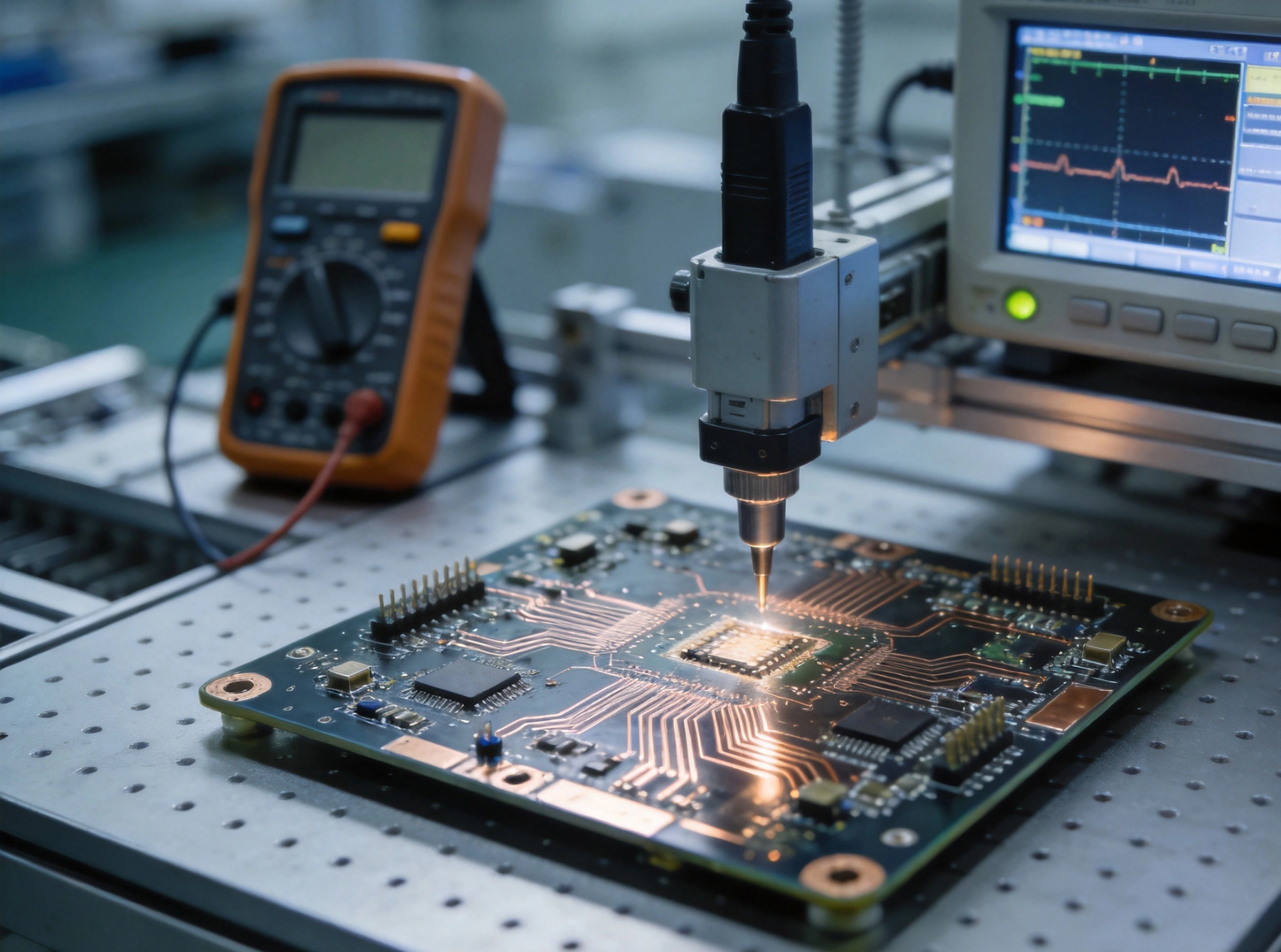
Understanding why HMLV manufacturing demands special attention starts with recognizing its fundamental differences from high-volume production.
In high-volume manufacturing, processes stabilize over thousands of identical cycles. Operators develop expertise with one product. Machine parameters are optimized and locked. Defect patterns emerge and are systematically addressed. Quality becomes predictable.
HMLV manufacturing constantly resets this process. Each new board design may require different:
This constant change creates opportunity for errors that high-volume production eliminates through repetition.
In HMLV, the first piece often matters most. A production run might consist of only 10-50 units. If the first piece is wrong, the entire lot might be wrong before the problem is detected. Unlike high-volume production where early defects can be isolated while processes are corrected, HMLV runs may complete before feedback arrives.
Each product changeover requires setup verification. Component feeders must be loaded correctly, programs loaded, and parameters confirmed. Setup errors—wrong component in a feeder, incorrect program loaded, misaligned stencil—are among the most common defect sources in HMLV manufacturing.
Industrial customers often specify unique quality requirements:
Managing diverse requirements across multiple products adds complexity absent in uniform production environments.
A documented Quality Management System provides the framework for consistent quality:
For Industrial Electronics, ISO 9001 certification provides the foundation. Additional certifications like IPC-A-610 for workmanship standards and customer-specific approvals demonstrate capability for demanding applications.
Each unique board design requires documented manufacturing instructions:
This documentation must be controlled, version-managed, and accessible to production personnel when needed.
First article inspection (FAI) validates that manufacturing setup is correct before production proceeds:
In HMLV manufacturing, FAI takes on heightened importance. For runs of fewer than 50 units, first article verification may represent 2-4% of production time—worth the investment to prevent systematic defects affecting entire lots.
Systematic setup verification prevents the majority of HMLV defects:
Create checklists for setup verification that operators must complete before first-piece production.
Monitor key parameters during production:
For HMLV, adjust monitoring intensity based on production volume and product complexity. Low-volume runs may justify 100% inspection where high-volume production would use sampling.
Traditional statistical process control (SPC) assumes production runs long enough for statistical significance. HMLV runs may be too short for meaningful control charting. Adapt SPC principles:
Aoi provides rapid, consistent inspection for HMLV production:
Challenge: Each new product requires programming. Maintain libraries of proven programs and invest in programming efficiency to make AOI practical for HMLV.
X-ray Inspection reveals hidden defects under BGAs, QFNs, and through via barrels:
Bed-of-nails Ict provides comprehensive electrical verification:
For HMLV, evaluate fixture cost against production volume. Very low volumes may not justify Ict; moderate volumes in recurring production may warrant fixture investment.
Functional Testing verifies board operation against requirements:
Functional test often represents the final quality gate. Document test coverage to ensure critical functions are verified.
Flying Probe Testing offers fixtureless electrical verification ideal for HMLV:
Flying probe is often the practical choice when production volumes don't justify ICT fixture investment.
Industrial customers often require material traceability:
Implement systems that capture lot numbers during assembly. Barcode scanning integrated with manufacturing execution systems enables efficient traceability without slowing production.
Document key process parameters for each production run:
For each board, maintain a device history record including:
This record provides evidence of quality controls and enables investigation if field issues arise.
Component quality starts with supplier qualification:
Verify incoming materials before production use:
For HMLV, receiving inspection may be the last opportunity to catch component issues before they affect production.
Proper storage prevents degradation:
HMLV often requires obsolete or hard-to-find components, increasing counterfeit risk:
Well-trained operators are essential for HMLV quality:
Certification demonstrates and documents competence:
Track certification status and renewal requirements to ensure personnel remain qualified.
Cross-training provides flexibility and coverage:
Catch defects early and document thoroughly:
Investigate defects to prevent recurrence:
For HMLV, recognize that some defects are truly random events. Focus analysis on patterns that span multiple products or recurring issues with specific components or processes.
Implement corrective actions that address root causes:
Track corrective action effectiveness through subsequent production monitoring.
Track metrics that drive improvement:
Present metrics consistently despite product diversity by normalizing to production volume or complexity factors.
Conduct periodic quality reviews:
Close the loop with customer input:
MES supports HMLV quality through:
Equipment connectivity enables:
Quality control in high-mix, low-volume Industrial Pcba demands systematic approaches that address the unique challenges of diverse, changing production. Success requires robust quality management systems, rigorous process controls, flexible testing strategies, and thorough documentation.
The key differentiator is vigilance. In high-volume production, quality can become routine through repetition. In HMLV, quality must be actively ensured for each setup, each product changeover, each unique customer requirement. This vigilance requires trained personnel, controlled processes, and management commitment to quality as a core value rather than a cost center.
Manufacturers who master HMLV quality control develop capabilities that serve demanding industrial customers reliably. They build reputations for delivering complex products consistently, earning trust that translates into lasting customer relationships.
The investment in quality systems, training, and technology pays returns through reduced rework costs, improved customer satisfaction, and protection against the field failures that can damage both reputation and customer operations. In industrial electronics, where products often serve critical applications, this quality investment isn't optional—it's essential for business success.
SMT vs. Through-Hole: Best Practices for Industrial PCBAJuly/07/2026
The Importance of Component Obsolescence Management in Industrial PCBAAugust/07/2026
X-Ray Inspection: Why It's Vital for Complex Industrial PCBA ProjectsSeptember/26/2026
Navigating the Complexities of Box Build AssemblyMay/27/2026
Selective Soldering Techniques for Mixed-Technology Industrial PCBA<September/09/2026
Manufacturing Processes for Extreme Heavy Copper Industrial PCBsAugust/15/2026
Industrial PCBA: Navigating the Complexities of Box Build AssemblyJune/09/2026
Rapid Prototyping Services: Fast-Tracking Your Industrial PCB SolutionsSeptember/30/2026