Open Nav


In the world of industrial hardware development, speed is a competitive advantage. Every week saved during the prototype phase is a week closer to field deployment, regulatory submission, or revenue generation. Yet the path from schematic to tested prototype is full of friction — procurement delays, minimum order quantities, production queue backlogs, and the inevitable design iterations that surface problems nobody anticipated. Rapid PCB prototyping services are built specifically to eliminate that friction, giving engineering teams a faster, more reliable path from concept to working hardware.
This article explains what rapid prototyping services actually cover, how they differ from standard production, what timelines to expect, and how to choose a prototyping partner that will accelerate rather than frustrate your development process.
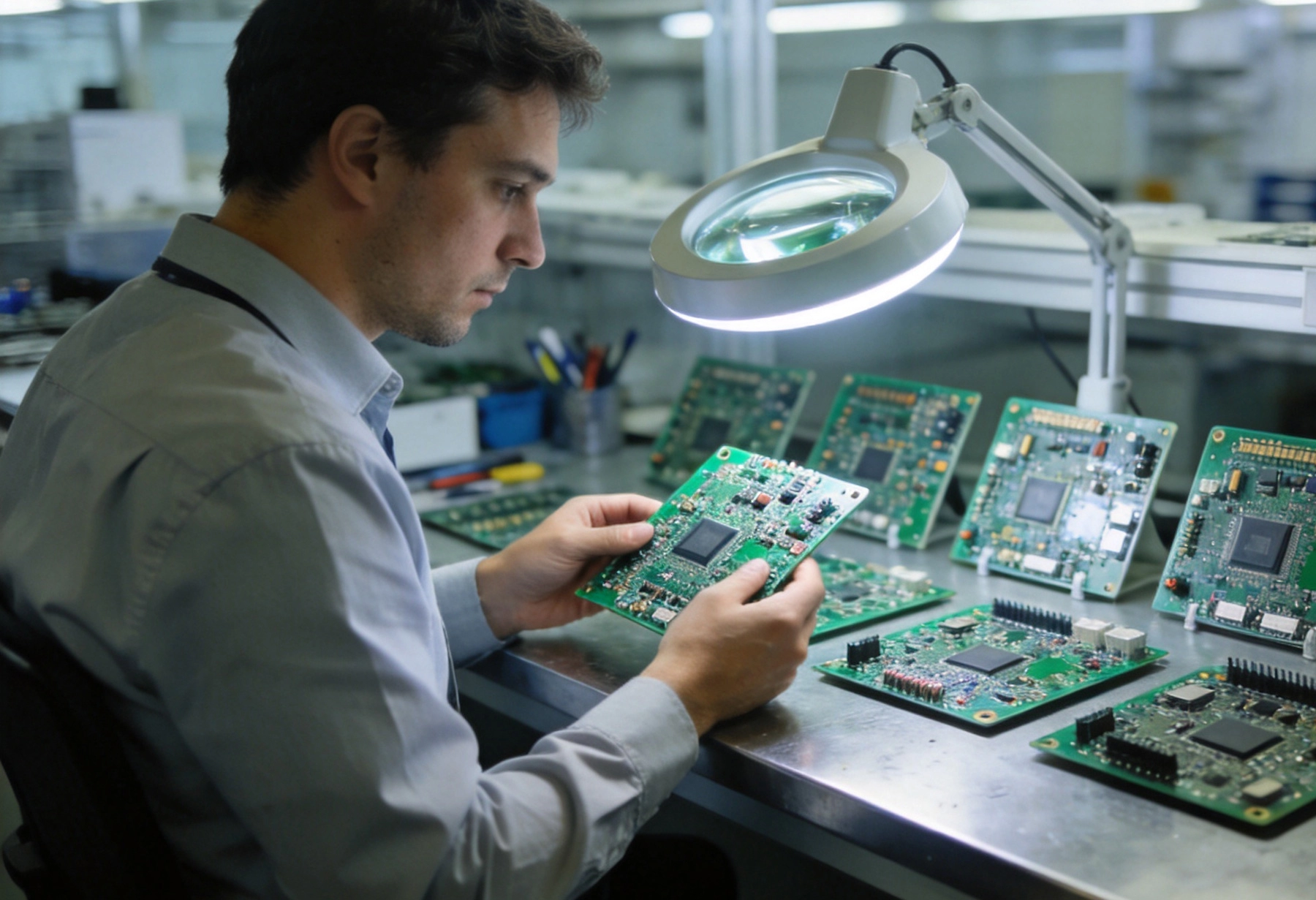
The term "rapid prototyping" is used loosely in the electronics industry, and not all providers mean the same thing by it. For the purposes of this article, rapid prototyping refers to a manufacturing service that is explicitly optimized for speed and small quantities — typically 1 to 25 boards — with the primary goal of delivering testable hardware to the engineering team as quickly as possible.
This is fundamentally different from standard production, where the priorities are cost efficiency, consistency across large quantities, and process optimization for a stable design. In prototyping, the design is by definition not stable — the whole point is to find the problems before the design is frozen. A prototyping service that tries to apply production-level rigor to every step of a prototype run will deliver slow, expensive results that defeat the purpose.
The best rapid prototyping services are designed around a different set of tradeoffs: they accept higher per-unit cost in exchange for faster delivery, they maintain flexible production scheduling that can absorb design changes between runs, and they provide engineering-level communication rather than production ticket processing.
The fastest bare board prototyping services can deliver multilayer boards in as little as 24 to 48 hours for simple designs, and 5 to 10 working days for complex HDI boards with blind and buried vias. The speed comes from dedicated quick-turn production queues that prioritize prototype work over standard production orders, smaller panel sizes that reduce the manufacturing footprint, and simplified material staging.
For Industrial Pcb designs, the key question when ordering quick-turn boards is whether the provider can handle the specific fabrication requirements of your design — high layer count, heavy copper, Controlled Impedance, specific base materials — without a significant time penalty. Some quick-turn services have a limited capability set that excludes complex stackups, and others have invested specifically in rapid HDI capabilities to serve the smartphone, medical, and automotive engineering communities that demand them.
True rapid prototype assembly goes beyond just the bare board. A turnkey prototype assembly service accepts design files and a bill of materials, procures the components — often from the provider's own inventory or through expedited sourcing channels — fabricates the boards, assembles the components, and delivers tested boards within a compressed timeline.
The assembly portion of this process has its own speed constraints. Component lead times are often the longest variable in the equation, particularly for specialized ICs that are not in the provider's standard inventory. A provider with deep component sourcing relationships and a broad in-stock inventory of common industrial components can assemble boards faster than one that must source every part from distributors.
Prototype boards are only useful if they work. Rapid prototyping services vary widely in what they provide in terms of inspection and testing. At a minimum, you should expect Aoi inspection to verify component placement and solder joint quality, and continuity testing to verify that the board powers on and the basic netlist is intact.
For designs with Controlled Impedance traces, BGA packages, or other high-risk features, you should confirm that the prototyping provider can provide impedance testing, X-ray Inspection for BGAs, or functional test development — and what lead times and cost are associated with each. These capabilities are not always included in the base prototype price and may require a separate scope or a longer lead time.
Understanding the steps in a typical rapid prototyping engagement helps you plan your project timeline and know what to expect at each stage.
Before sending files to a prototyping provider, ensure that your deliverables are complete and correct. The essential files for a turnkey prototype are:
An incomplete or ambiguous BOM is one of the most common causes of prototype delays. Part numbers that are ambiguous, generic descriptions instead of manufacturer-specific part numbers, or notes like "any equivalent will do" without explicit authorization all create risk and delay. Investing 30 minutes in a clean, precise BOM before submission saves days in the long run.
A good prototyping provider performs a Design For Manufacturing (DFM) review on the first article before releasing the design to production. This review catches problems like undersized annular rings, missing fiducial marks, Solder Mask dams that are too narrow for the pad spacing, and other issues that would cause manufacturing defects or board failures.
The DFM review is most valuable when it happens before fabrication, not after. Some providers offer pre-build DFM reviews that you can request when you submit your files, giving you a chance to correct design issues before any manufacturing steps begin. This is especially valuable for engineers who are new to a particular fabrication technology — for example, first-time HDI designers who may not be aware of minimum feature size requirements for laser-drilled microblind vias.
While the bare boards are being fabricated, the component procurement team sources the parts listed in the BOM. For standard passives and commonly used ICs, this is typically straightforward. For specialized components — custom ASICs, application-specific sensors, or long-lead-time power components — the procurement timeline can become a critical path item.
If your design includes components that are not immediately available, your prototyping provider should communicate this promptly and work with you to find alternatives: same-footprint alternatives from a different manufacturer, lower quantity packaging options, or in some cases, partial assembly with a commitment to complete the build when the long-lead parts arrive.
Once the bare boards and components are both on hand, the assembly process runs. For a quick-turn prototype run of 5 to 10 boards, assembly typically takes 1 to 3 days depending on component count and the provider's production scheduling. The assembled boards then go through inspection — Aoi at minimum, plus any additional test steps that were agreed upon during scope definition.
The finished boards are packaged and shipped, along with documentation that typically includes the AOI inspection report, any test data, a copy of the approved reflow profile, and a first article inspection report if one was performed. This documentation is important for engineering records and becomes the baseline against which future production lots will be compared.
The single biggest threat to a successful rapid prototype engagement is an unstable design. If the schematic or component selection is still changing while the prototype is in production, the provider will end up building components into a board that is already obsolete. This wastes both money and time.
The fix is straightforward: freeze the design before submitting for prototype fabrication. Define what "frozen" means for your project — a schematic that has been reviewed by the electrical engineering team, a BOM that has been validated against the schematic, and a layout that has been reviewed for DFM issues — and do not submit for prototyping until that bar is met.
As mentioned earlier, BOM quality is a major factor in prototype timeline. An incomplete BOM — one that is missing part numbers, has generic descriptions, or includes components that are not commercially available — triggers a sourcing clarification loop that can add days to the lead time. For a 10-day prototype run, even a two-day delay in component sourcing is a 20 percent impact on the timeline.
Some designs cannot be prototyped as fast as others. A 12-layer HDI board with Sequential Lamination, controlled impedance, and heavy copper will take longer to fabricate than a 4-layer standard board, no matter how quick-turn the service. A board with a BGA at 0.3 mm pitch will require X-ray Inspection and may need a longer lead time than one with standard QFP packages. Understanding what your design requires and building realistic expectations into the project plan prevents frustration and enables better scheduling of downstream validation activities.
Moisture-sensitive components — BGAs, plastic QFNs, and many microcontrollers — have a defined shelf life after they are removed from dry storage and a maximum time after opening before they must be assembled. If a prototype run is delayed and components sit on the shelf too long, they may need to be rebaked before assembly, which adds time and can damage components if not done correctly. A prototyping provider that manages moisture-sensitive components proactively will track these dates and alert you if there is a risk.
One of the most important but often overlooked benefits of a good rapid prototyping engagement is that it generates the process knowledge needed to transition smoothly to production. The prototype run reveals the fabrication and assembly challenges that will also appear in production — and the documentation from the prototype run becomes the baseline for production process qualification.
The prototype is not just a check that the design works — it is a data collection exercise. The thermal behavior of the board under load, the Signal Integrity performance of the high-speed interfaces, the mechanical fit of the board in the enclosure, and the results of any Functional Testing all provide information that feeds back into the next design revision. Teams that treat the prototype as a binary pass/fail exercise miss this opportunity to extract maximum learning from each build.
When the design is finally frozen and ready for production, the prototype run documentation — the approved fabrication specifications, the qualified reflow profile, the approved BOM, the DFM issue log and resolutions — provides the foundation for the production qualification process. Rather than starting from scratch with a new manufacturing partner, you can hand this package to a production EMS provider and ask them to qualify to the same standards, reducing the production ramp time significantly.
Some rapid prototyping providers also offer low-volume production services, allowing you to scale from the prototype lot directly into a larger initial production run without changing partners. This continuity has real value: the provider already knows your design, has already worked through the process challenges, and can begin production at a higher yield than a new provider starting from scratch.
Not all rapid prototyping services are created equal. Here are the key evaluation criteria for selecting a partner for Industrial Pcb prototyping.
The provider must be able to fabricate and assemble the specific technology your design requires. If you need HDI, ask specifically whether they support laser-drilled microblind vias and what the minimum feature size is. If you need high-frequency materials, confirm that they have experience with Rogers or other specialty laminates. If you need controlled impedance, verify that they have Tdr Testing capability to qualify the impedance targets on the prototype run.
The provider's component sourcing network matters for how quickly they can respond to a BOM. Providers with broad distributor relationships and in-house inventory of industrial-grade components can start procurement immediately upon file submission. Providers with limited sourcing infrastructure may need to wait for distributor quotes and stock checks, adding time to the component procurement phase.
For prototype engagements, the communication model matters more than in production. You want a provider that assigns an engineering point of contact who can discuss DFM issues, answer process questions, and escalate problems quickly — not a customer service ticket system that routes you through a generic inbox. Ask about how they handle design clarification, component substitution requests, and quality issues discovered during assembly. A provider that communicates proactively during a prototype run is worth paying a premium over one that goes silent until the boards ship.
Confirm what documentation is included in the prototype delivery. At a minimum, you should receive AOI inspection results, a test report, and a copy of the reflow profile. For regulated industry applications, you may also need the first article inspection report, certificate of conformance, and traceability documentation for components and base materials. A provider that cannot or will not provide documentation is difficult to qualify for medical, automotive, or aerospace applications.
Rapid PCB prototyping services exist to compress the hardware development cycle — not by cutting corners, but by applying a different set of priorities and process choices to the manufacturing workflow. The best providers in this space optimize for speed, communication, and engineering support, accepting higher per-unit costs and smaller batch sizes in exchange for delivering working hardware to the engineering team in days rather than weeks.
Getting the most value from a rapid prototyping engagement requires preparation: a stable design, a clean BOM, a clear specification for what the prototype must validate, and realistic expectations about what the technology in your design will support in a given timeline. Teams that invest in this preparation consistently get better results from their prototyping engagements — faster delivery, fewer surprises, and cleaner handoffs from prototype to production.
Contact us to discuss your requirements.
Why Choose Rigid-Flex PCB Solutions for Complex Industrial Assemblies?June/17/2026
Material Selection Guide for High-Speed Industrial PCB SolutionsJuly/14/2026
Signal Integrity Benefits of High-Layer Count and HDI SolutionsAugust/12/2026
An Introduction to HDI Technology for Compact Industrial ElectronicsJune/16/2026
Controlling Impedance in High-Frequency Industrial PCB DesignsJuly/30/2026
Unlocking Performance with High-Layer Count Industrial PCB SolutionsJune/15/2026

Designing High-Frequency PCBs for Industrial 5G and IoT ApplicationsJune/26/2026
Reducing Weight and Space with Rigid-Flex Industrial PCB SolutionsJuly/28/2026