

Industrial Pcb applications operate in environments that consumer electronics never encounter. Whether your boards control automotive systems, power factory automation equipment, or regulate energy distribution infrastructure, the consequences of failure extend beyond inconvenience into safety and liability concerns. Selecting the right manufacturing partner for custom Industrial Pcb solutions ranks among the most consequential decisions engineering teams make. This guide provides a structured approach to evaluating partners, asking the right questions, and building relationships that support long-term product success.

Before evaluating potential partners, engineering teams should understand what distinguishes Industrial Pcb requirements from standard commercial applications. This understanding shapes the evaluation criteria and reveals which capabilities matter most.
Industrial boards frequently operate across extreme temperature ranges, high humidity conditions, vibration environments, and exposure to chemicals or particulates. A partner capable of producing consumer gadgets may lack experience with boards rated for -40°C to +125°C operation or boards that must survive 10g vibration loads throughout their service life.
Material Selection for industrial applications differs significantly from commercial grades. Your manufacturing partner should understand the tradeoffs between standard FR-4 materials and high-reliability alternatives such as polyimide, Rogers laminates, or specialized composites designed for Thermal Management or high-frequency performance.
Consumer electronics may see 3-5 year product lifecycles. Industrial equipment often operates for 15-25 years, sometimes longer. This extended horizon has profound implications for manufacturing partner selection:
Industrial Pcb applications frequently require compliance with standards that consumer electronics simply ignore. Automotive applications demand Iatf 16949 certification. Medical devices require ISO 13485 and FDA compliance documentation. Aerospace and defense contracts may require AS9100 registration and ITAR compliance. Railway applications reference EN 50155 standards. Your manufacturing partner must navigate this regulatory landscape competently.
With industrial PCB requirements in mind, the following evaluation criteria help engineering teams systematically assess potential manufacturing partners.
Begin with a rigorous examination of each candidate's technical capabilities. This goes beyond reviewing marketing materials to understand actual manufacturing competencies.
Layer count and complexity: What is the maximum layer count the facility can produce reliably? Industrial applications increasingly demand 6, 8, or 10+ layer boards with Controlled Impedance, blind and buried vias, and high-density interconnect features. A partner that struggles with 4-layer boards cannot grow with your requirements.
Material expertise: Does the partner demonstrate experience with materials beyond standard FR-4? Ask specifically about polyimide, high-Tg substrates, metal core boards, and specialized RF materials. The ability to work with challenging materials often indicates broader technical depth.
Minimum feature sizes: Industrial designs increasingly approach consumer electronics density. Understand the partner's capabilities for fine-pitch components, micro-vias, and tight tolerances. The gap between "can produce occasionally" and "produces reliably" may be significant.
Industrial PCB failures carry real costs—equipment damage, safety incidents, and warranty claims that dwarf the original board purchase price. Quality systems matter more than marketing claims about "high quality."
Certification status: Verify actual certifications, not just stated compliance. Request copies of current certificates and verify them directly with issuing bodies when possible. Look for ISO 9001 as a baseline, with additional industry-specific certifications as relevant to your application.
Incoming inspection processes: How does the partner verify component authenticity and quality? Industrial applications face counterfeiting risks that standard commercial production may ignore. Ask about their anti-counterfeiting protocols and incoming quality verification procedures.
Process control documentation: Request examples of actual process control documentation from similar projects. The difference between a partner that tracks process parameters versus one that simply responds to defects after they occur can be substantial.
Manufacturing partnerships often span years or decades. The financial stability of your partner affects their ability to invest in capabilities, weather market fluctuations, and continue serving your needs over your product's lifecycle.
Request financial references or credit reports for significant partnerships. Understand the partner's investment trajectory—have they been upgrading equipment and facilities, or running in maintenance mode? A partner declining relative to competitors may become a liability as your requirements evolve.
Direct conversations reveal more than documentation. The following questions help engineering teams understand potential partners at deeper levels than sales presentations permit.
"Walk me through a challenging industrial PCB problem you solved recently." This question reveals problem-solving approach and whether the partner has genuinely wrestled with industrial challenges or simply processed routine commercial work.
"What industries have you served, and which application types are you most experienced with?" Industrial experience comes in many forms. A partner experienced with automotive safety systems has confronted different challenges than one focused on industrial motor controls, even if both claim "industrial" expertise.
"Describe your longest ongoing customer relationship. What has maintained that partnership?" Longevity of relationships often indicates reliability. Partners that retain customers for 10+ years have demonstrated staying power and relationship management capabilities.
"How do you handle design files that require manufacturing adjustments? Walk me through your DFM process." Every design encounters manufacturing considerations. A partner with a structured DFM process will improve your design iteratively rather than simply building what you draw.
"What happens when a board fails testing? Walk me through your defect analysis and resolution process." Failures are inevitable. What matters is how partners respond—do they simply scrap and rebuild, or do they perform root cause analysis that prevents recurrence?
"How do you manage documentation and traceability for long-lifecycle products?" Your product may need support in 2045. Can this partner still access the records from today's production run? Understanding their archival and retrieval capabilities matters for extended lifecycle products.
"What is your typical production capacity, and how quickly can you scale up if needed?" Industrial demand often grows rapidly or fluctuates seasonally. Understanding the partner's headroom and flexibility prevents supply constraints from limiting your market opportunities.
"Do you offer prototyping services separate from production? How do prototyping learnings transfer to production?" Many partners handle prototyping and production differently, using different equipment or personnel. This separation can create disconnect between prototype validation and production delivery.
Nothing substitutes for direct observation of a manufacturing facility. Whenever possible, engineering teams should conduct site visits as part of partner evaluation. The following observations prove most revealing.
A well-organized facility reflects operational discipline that extends beyond aesthetics. Observe whether the floor is clean, whether materials are properly stored and labeled, and whether workstations appear orderly. Disorganization often correlates with quality escapes and process variability.
Modern Pcb Manufacturing requires sophisticated equipment. Assess whether equipment appears well-maintained and current rather than antiquated. Ask about equipment investment cycles and recent upgrades. A facility running 20-year-old reflow ovens may be constrained by their equipment limitations.
Observe worker behavior during your visit. Do employees appear engaged and professional, or disengaged and going through motions? Inquire about staff turnover rates and training programs. A partner that invests in their workforce typically delivers better consistency than one treating labor as a commodity.
Look for visible quality systems: in-process inspection stations, SPC charts posted at equipment, organized defect documentation. These visible indicators suggest a culture of quality rather than inspection as an afterthought.
Partner selection marks the beginning rather than the conclusion of the relationship. Engineering teams that invest in relationship building with their manufacturing partners often outperform those that treat suppliers adversarially.
Involve your manufacturing partner early in the design process, ideally during schematic development rather than after layout completion. Early engagement allows partners to influence design decisions that affect manufacturability, component selection, and test strategy before these choices become expensive to change.
Establish communication protocols that work for both parties. This includes regular check-in cadences, defined escalation paths for issues, and shared visibility into production status. Partners that communicate proactively about challenges—before they become crises—prove more valuable than those that hide problems until concealment is no longer possible.
Approach manufacturing challenges as joint problems rather than supplier failures. When defects occur, work together to understand root causes and implement corrective actions. This collaborative approach builds relationship equity that pays dividends when circumstances become difficult.
Long-term partnerships require commercial fairness. This includes reasonable payment terms, honest cost discussions, and recognition that partners need reasonable margins to invest in capabilities that serve your future needs. Engineering teams that squeeze suppliers to the point of strain often find their "savings" consumed by quality problems and relationship friction.
Certain warning signs should prompt additional investigation or reconsideration of specific candidates.
Finding the right partner for custom Industrial Pcb Solutions requires more effort than simply selecting the lowest-cost qualified bidder. Industrial applications demand manufacturing partners with genuine technical expertise, robust quality systems, financial stability, and relationship orientations that support long-term success. Engineering teams that invest in systematic evaluation, ask probing questions, conduct direct facility observation, and cultivate genuine partnerships position themselves for manufacturing relationships that enhance rather than constrain their competitive position.
The right partner becomes an extension of your engineering capability—a resource that contributes expertise, catches problems early, and grows alongside your requirements. Building that relationship on a foundation of mutual understanding, realistic expectations, and transparent communication creates the conditions for long-term success in demanding industrial applications.
Minimum certifications include ISO 9001 for quality management. Industry-specific certifications may include Iatf 16949 (automotive), ISO 13485 (medical), AS9100 (aerospace), and ISO 14001 (environmental management). Request copies of current certificates and verify scope and expiration dates.
Geographic proximity matters less than it once did due to improved logistics and communication tools. However, proximity simplifies site visits, enables faster response to urgent issues, and may reduce shipping costs and lead times. Balance proximity advantages against the possibility that the best technical fit is located farther away.
Exclusivity arrangements carry tradeoffs. They may secure capacity and attention but limit your flexibility to optimize across multiple suppliers. For critical industrial applications with high volume, some dedicated capacity arrangements make sense, but pure exclusivity often benefits the supplier more than the customer.
Request financial references, review Dun & Bradstreet or similar credit reports, and evaluate the partner's investment patterns. Consistent equipment upgrades, facility expansion, and staff growth suggest financial health. Declining capabilities or equipment deferred maintenance suggest problems.
Minimum order quantities vary widely. Some partners accept low-volume industrial orders starting at 5-25 units for prototyping while requiring 100-500+ units for production. The economics of industrial manufacturing often improve significantly at 500+ unit quantities, but flexibility for lower volumes exists for qualified partners.
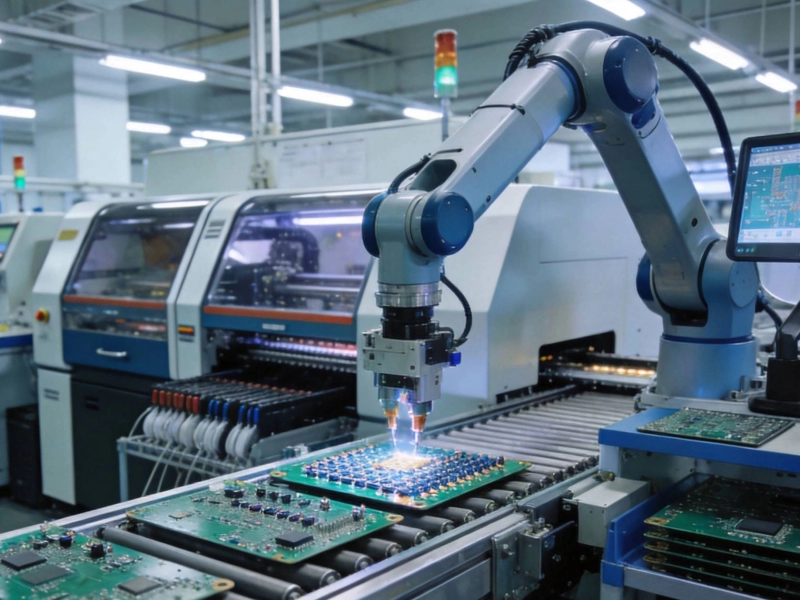
End-to-End Industrial PCB Solutions: From Design to DeliveryJuly/08/2026
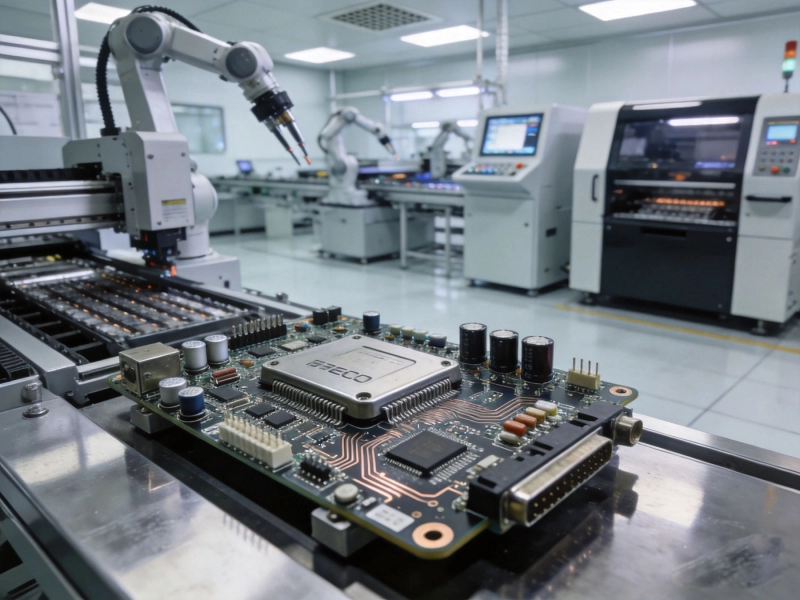
Custom Industrial PCB Solutions for the Automotive SectorMay/27/2026

Rogers vs. PTFE: Comparing Materials for High-Frequency SolutionsSeptember/17/2026
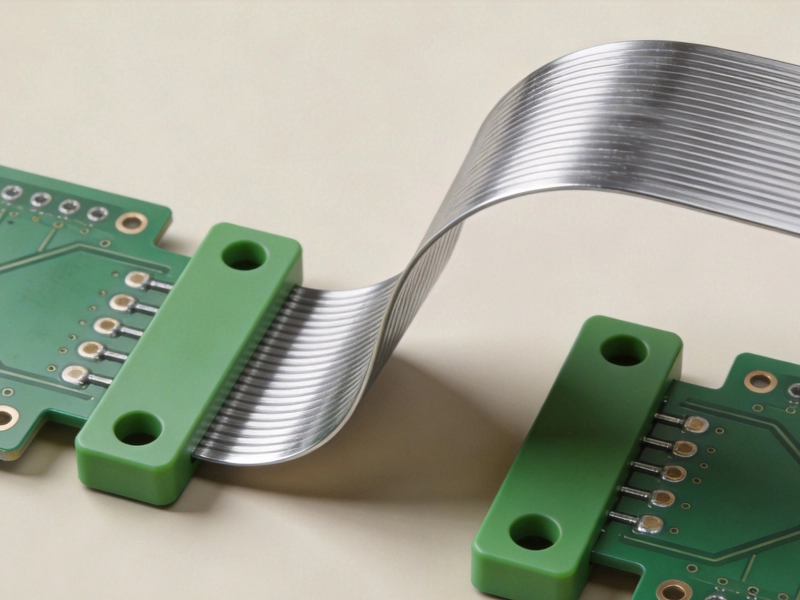
Reducing Weight and Space with Rigid-Flex Industrial PCB SolutionsJuly/28/2026

Innovative Industrial PCB Solutions for Renewable Energy SystemsAugust/10/2026
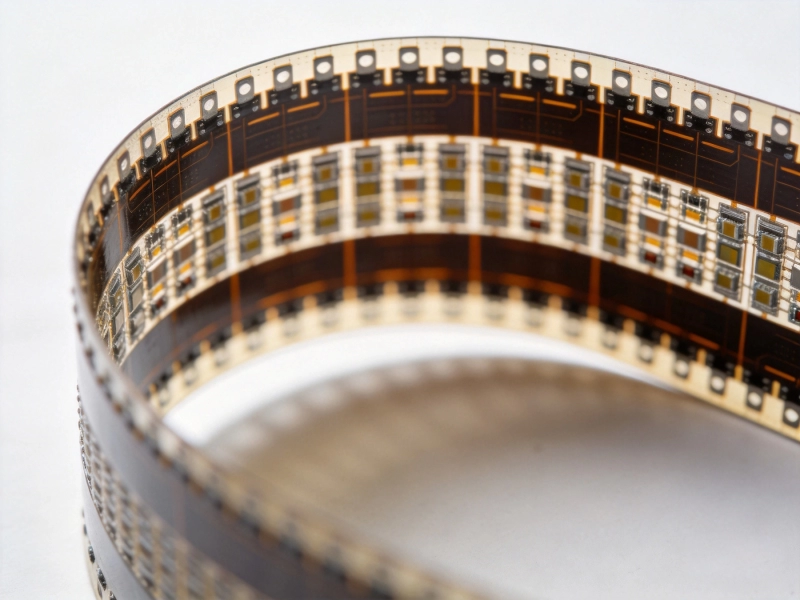
Overcoming Bend Radius Challenges in Flex PCB SolutionsAugust/14/2026
Rapid Prototyping Services: Fast-Tracking Your Industrial PCB SolutionsSeptember/30/2026
Stack-up Design Strategies for High-Layer Count Industrial PCBsOctober/09/2026