
Home Blog Industrial PCB Production

How to Scale Your Industrial PCB Production for Mass Manufacturing

June/02/2026

Transitioning from prototype or low-volume production to mass manufacturing represents one of the most significant challenges in electronics product development. What works flawlessly for building dozens of units often breaks down catastrophically when attempting to produce thousands or tens of thousands. The jump from craft-based small-scale production to industrial-grade mass manufacturing of PCBs requires fundamental changes in design approach, supplier relationships, process control, and quality management.

Successfully scaling Industrial Pcb Production separates thriving electronics companies from those that struggle to escape the prototype trap. The difference lies not just in finding bigger facilities, but in adopting industrial thinking that prioritizes consistency, repeatability, and systematic problem-solving over individual heroics.

This comprehensive guide walks through the essential strategies, considerations, and best practices for scaling your PCB production from boutique volumes to true mass manufacturing.
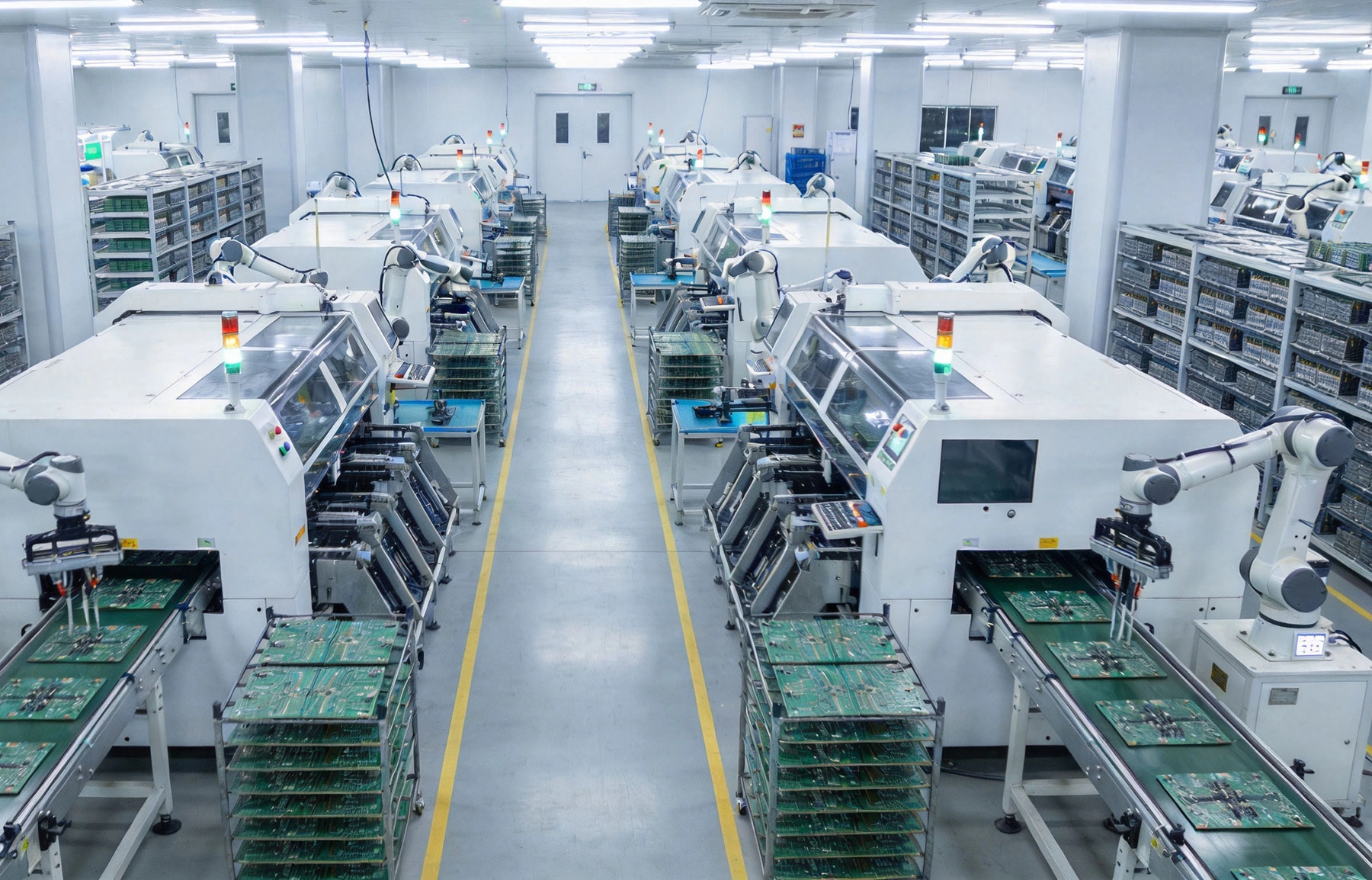
How to Scale Your Industrial PCB Production for Mass Manufacturing

Understanding the Scale-Up Challenge

Before diving into specific strategies, it's important to understand why scaling PCB production is genuinely difficult. Many companies underestimate the magnitude of this transition, leading to costly surprises when production volumes increase.

From Art to Science

Low-volume production often works through personal attention and improvisation. Skilled operators adapt to variations, catch problems before they cause failures, and compensate for marginal conditions. This approach doesn't scale because:

  • Human attention becomes a bottleneck when volume increases
  • Improvisation creates inconsistency across production runs
  • Expertise developed by individuals doesn't transfer to larger teams
  • Marginal processes that work at low volume fail at high volume

Industrial production requires transforming manufacturing from art to science—documented processes that produce consistent results regardless of who operates them or when they run.

Economics Change Dramatically

The economics that work at low volume often invert at high volume:

  • Setup costs: Diluted across more units at low volume become dominant at high volume
  • Component costs: Volume pricing at low volume disappears if demand exceeds supplier capacity
  • Quality costs: Scrap rates acceptable at low volume become prohibitively expensive at scale
  • Logistics: Manual handling feasible for dozens becomes impossible for thousands

Successful scaling requires rethinking economics from first principles rather than simply doing more of what worked before.

Design for Manufacturability at Scale

The foundation of successful mass production is laid during the design phase. Designs optimized for prototypes often prove disastrous for mass manufacturing, while designs made with manufacturing in mind from the start enable smooth scaling.

Simplify for Repeatability

Complex designs that work through careful hand-tuning fail in mass production where variation is the norm. Simplify designs by:

  • Reducing component variety: Standardize on fewer component types that can be procured in volume
  • Widening tolerances: Specify tolerances that most components can meet rather than narrow ranges requiring selection
  • Eliminating sensitive processes: Remove steps that require special skills or equipment
  • Simplifying assembly: Designs that can be assembled in standard ways scale better than those requiring custom fixturing

Design for Automated Assembly

Manual assembly doesn't scale. Design for automated processes from the start:

  • Standard component packages: Use packages designed for automated placement (SOIC, QFP, standard QFN/BGA)
  • Adequate spacing: Components too close together cause placement and inspection problems
  • Clear polarity: Make component orientation unambiguous to prevent assembly errors
  • Standard footprints: Use industry-standard pad patterns rather than custom geometries

Consider Testability

Testing at scale requires different approaches than prototype verification:

  • Test Points: Add dedicated Test Points for in-circuit testing
  • JTAG access: Include JTAG connectors for boundary scan testing
  • Built-in self-test: Design hardware support for software-driven Functional Testing
  • Debug access: Include connectors or headers for diagnostic access

Supplier Selection and Management

Your manufacturing partners determine your production capacity. Selecting and managing suppliers effectively is critical for successful scaling.

Evaluating Manufacturing Partners

When selecting partners for Industrial Pcb Production, evaluate beyond basic capabilities:

  • Capacity headroom: Can they handle significantly more volume than you currently need?
  • Growth experience: Have they helped other customers scale from similar volumes?
  • Equipment investment: Are they continuously upgrading equipment for efficiency?
  • Quality systems: Do they have mature systems (ISO 9001, Iatf 16949) with proven effectiveness?
  • Financial stability: Can they invest in your growth partnership?

Capacity Planning

Never plan capacity based on current needs alone. For sustainable scaling, ensure your partner has:

  • Documented capacity: Clear understanding of maximum production capability
  • Growth headroom: Identified path to expand capacity if needed
  • Secondary sources: Backup capacity for emergencies
  • Demand visibility: Systems to track and respond to your forecasts

Building Strategic Partnerships

Transactional supplier relationships don't support scaling. Build partnerships through:

  • Long-term commitments: Provide volume commitments in exchange for capacity guarantees
  • Joint planning: Include partners in your product roadmap discussions
  • Fair profitability: Ensure partners earn enough to invest in your success
  • Open communication: Share challenges and successes transparently

Component Procurement Strategies

Component availability and pricing often become the constraint on production scaling. Managing this constraint is essential for successful volume ramp.

Volume Purchasing Agreements

Secure supply through formal agreements:

  • Volume commitments: Commit to purchase quantities in exchange for allocation priority
  • Price agreements: Lock in pricing for defined periods to enable accurate costing
  • Buffer stock: Negotiate to maintain safety stock at your facility or theirs
  • Allocation terms: Define how shortages will be allocated across customers

Approved Vendor Lists

Reduce qualification burden through structured AVL management:

  • Primary and alternate sources: Qualify multiple sources for critical components
  • Second-source equivalents: Find drop-in replacements that require minimal requalification
  • Long-lived parts: Prefer components with long production lifecycles to avoid obsolescence
  • Lifecycle management: Track component lifecycles and plan transitions proactively

Inventory Strategy

Balance cash flow against supply security:

  • Just-in-time: Minimize inventory but accept supply risk
  • Safety stock: Maintain buffer inventory based on demand and supply variability
  • Strategic reserves: Stockpile long-lead-time or shortage-prone components
  • Consignment: Have suppliers hold inventory you pay for only when consumed

Process Optimization for High Volume

Processes that work at low volume often prove inefficient or ineffective at high volume. Systematic process optimization is essential for successful scaling.

Line Balancing and Optimization

High-volume production requires efficient flow:

  • Cycle time analysis: Identify bottlenecks limiting throughput
  • Workload balancing: Distribute work evenly across stations
  • Parallel processing: Split operations that can run simultaneously
  • Continuous flow: Eliminate batch processing where possible

Statistical Process Control

Monitor and control processes statistically:

  • Key characteristics: Identify critical parameters to monitor
  • Control charts: Track process variation over time
  • Capability studies: Measure process capability (Cpk) for critical parameters
  • Out-of-control response: Define clear responses when processes drift

Continuous Improvement Culture

Industrial production improves over time through systematic effort:

  • Kaizen events: Regular focused improvement activities
  • Root cause problem-solving: Address fundamental causes rather than symptoms
  • Best practice sharing: Spread learnings across production lines and shifts
  • Employee involvement: Frontline workers often see the best improvement opportunities

Quality Control at Scale

Quality approaches that work at low volume—detailed human inspection, individual attention—don't scale. Industrial quality requires different approaches.

Prevention Over Detection

Finding defects after they occur doesn't scale. Shift to preventing defects:

  • Poka-yoke: Design processes to make defects impossible or obvious
  • Process controls: Build quality into processes rather than inspecting it in
  • Six Sigma: Reduce variation to prevent defects from occurring
  • Lean manufacturing: Eliminate waste that leads to quality problems

Automated Inspection

Automated inspection replaces human inspection at scale:

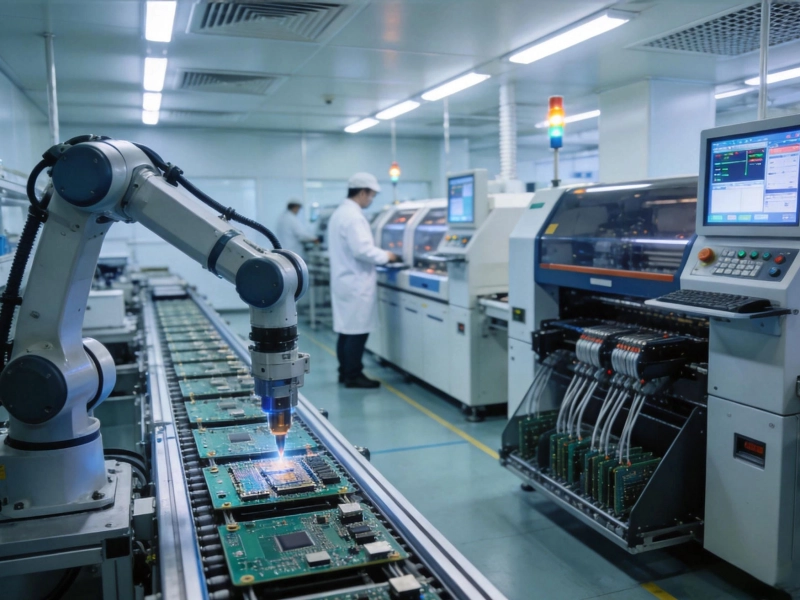
  • Automated Optical Inspection (AOI): Detects solder defects, component placement errors
  • X-ray inspection: Verifies hidden solder joints on BGA and QFN packages
  • Automated testing: In-circuit test, functional test, boundary scan
  • Vision systems: Identifies defects that escape AOI

Quality Metrics and Monitoring

You can't manage what you don't measure. Establish meaningful metrics:

  • Defect rates: DPPM (defects per million) provides meaningful comparison at scale
  • First-pass yield: Measures process stability from initial production
  • Cost of quality: Tracks financial impact of quality performance
  • Customer returns: Monitors field quality performance

Building Production Infrastructure

Mass manufacturing requires infrastructure beyond just production equipment.

Material Handling Systems

Moving materials manually doesn't scale. Invest in material handling:

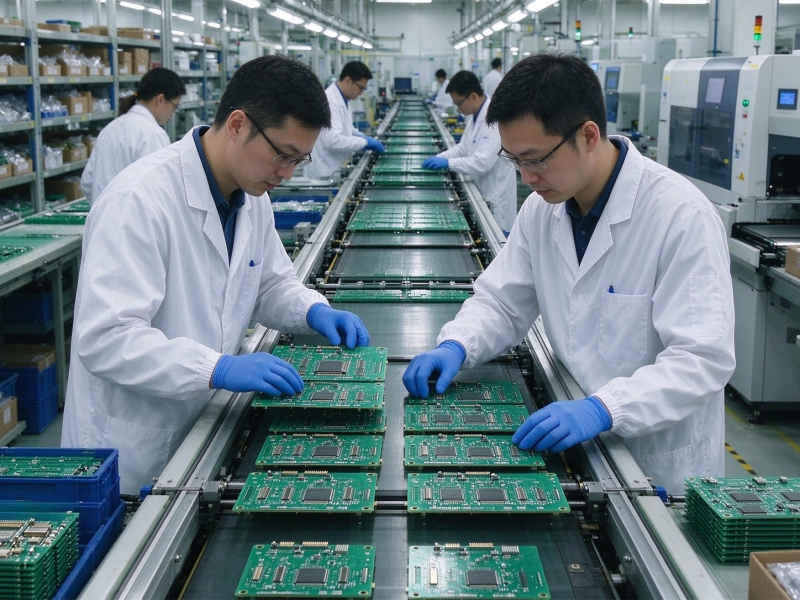
  • Conveyor systems: Move boards automatically through production
  • Component feeders: Automate component supply to pick-and-place machines
  • Material tracking: Barcode or RFID systems track components through production
  • Warehouse management: Systems to manage component and finished goods inventory

Production Planning and Control

Coordinate complex production through systems:

  • ERP systems: Enterprise resource planning for overall production coordination
  • MES systems: Manufacturing execution systems for detailed production control
  • Scheduling optimization: Software to optimize production sequencing
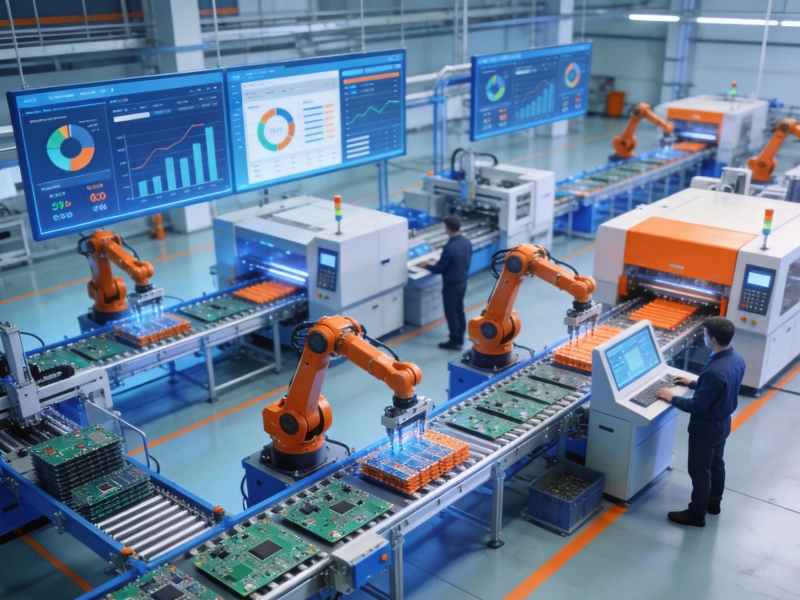
  • Real-time monitoring: Dashboard visibility into production status

Documentation and Training

Industrial production requires explicit knowledge transfer:

  • Work instructions: Clear, visual instructions for every operation
  • Training programs: Structured training for all production roles
  • Certification tracking: Monitor operator qualifications and expirations
  • Version control: Manage revisions to manufacturing documentation

Risk Management in Mass Production

Volume production concentrates risk. What was a minor issue at low volume becomes a major problem at high volume. Systematic risk management is essential.

Supply Chain Risk

Volume production increases supply chain vulnerability:

  • Single-source components: Identify and qualify alternate sources
  • Geographic concentration: Understand exposure to regional disruptions
  • Supplier financial health: Monitor for signs of supplier problems
  • Buffer strategies: Maintain appropriate safety stock based on risk assessment

Quality Risk

Volume amplifies quality problems:

  • Statistical process control: Detect process drift before it causes defects
  • Incoming inspection: Verify component quality at receipt
  • Process failure modes: Understand how processes can fail and prevent it
  • Early warning systems: Monitor for trends that predict problems

Capacity Risk

Growth can outpace capacity:

  • Capacity monitoring: Track capacity utilization to anticipate constraints
  • Alternative sources: Qualify backup production capability
  • Demand shaping: Work with sales to smooth demand peaks
  • Lead time management: Set customer expectations based on real capacity

Common Scaling Mistakes to Avoid

Learning from others' failures saves significant time and money.

Underestimating Quality Challenges

Many companies assume quality problems will solve themselves with volume. They won't. Invest in quality infrastructure upfront rather than reacting to failures.

Overloading Existing Suppliers

Asking existing suppliers to dramatically increase volume without corresponding investment often results in quality problems. Provide clear growth commitments and timelines to justify their investment.

Neglecting Component Availability

Component shortages can halt production completely. Start securing component supply for volume production months before you need it.

Skipping Qualification Steps

Pressure to ship can lead to skipping necessary qualification steps. This often leads to field failures that cost far more than the delayed shipment.

Failing to Build Team Capacity

High-volume production requires more people with different skills. Don't assume your small team can manage dramatically higher volumes without expansion.

Case Study: Successful Scale-Up

Consider the journey of a consumer electronics company that successfully scaled from 5,000 units monthly to 100,000 units monthly over two years:

Phase 1: Foundation (Months 1-6)

  • Redesigned products for automated assembly
  • Qualified secondary component sources
  • Selected strategic manufacturing partner with expansion capability
  • Implemented statistical process control in pilot production
  • Built quality documentation system

Phase 2: Optimization (Months 7-12)

  • Optimized production line for throughput
  • Reduced first-pass reject rate from 3% to 0.5%
  • Implemented automated inspection systems
  • Established continuous improvement program
  • Negotiated volume purchasing agreements for components

Phase 3: Scale (Months 13-24)

  • Expanded to second production line
  • Added secondary manufacturing source for redundancy
  • Implemented ERP and MES systems
  • Achieved sustained 100,000+ unit monthly production
  • Maintained quality levels from optimization phase

Conclusion

Scaling Industrial Pcb production for mass manufacturing is challenging but achievable with proper planning and execution. Success requires moving beyond prototype thinking to industrial methodology that prioritizes repeatability, systematic problem-solving, and continuous improvement.

The key elements of successful scaling include designing for manufacturability from the start, building strategic partnerships with capable suppliers, implementing systematic process control, investing in quality infrastructure, and managing risks proactively. Companies that master these elements can grow from boutique volumes to mass production while maintaining quality and controlling costs.

Whether you're scaling from hundreds to thousands of units or from thousands to hundreds of thousands, the principles remain the same: think industrial from the beginning, invest in the foundation, and build partnerships that grow with you. The rewards—market share, customer satisfaction, and sustainable profitability—make the effort worthwhile.

Start your scale-up journey today by evaluating your current designs and supplier relationships against the principles in this guide. Identify the gaps, prioritize improvements, and begin building the foundation for mass manufacturing success.

Frequently Asked Questions

How long does it take to scale PCB production from prototype to mass manufacturing?

Timeline varies significantly based on product complexity, existing infrastructure, and readiness. A typical timeline might be 6-12 months for straightforward products with willing partners, while complex products or products requiring new supplier qualification might take 18-24 months. Rushing this timeline often leads to quality problems that cost more than the delayed launch.

What is the typical cost increase when scaling to mass production?

Unit costs typically decrease 20-50% when scaling from prototype/low-volume to mass production, driven by volume pricing, optimized processes, and amortized setup costs. However, total investment in quality infrastructure, systems, and working capital increases significantly. Focus on total cost of ownership rather than unit cost alone.

How do I find manufacturers capable of high-volume PCB production?

Look for manufacturers with documented high-volume experience, modern automated equipment, mature quality systems, and capacity headroom beyond your current needs. Industry directories, trade show contacts, and referrals from companies at similar scale provide starting points. Always verify capabilities through samples, audits, and references.

What quality levels should I expect at mass production scale?

Industry-standard quality for consumer electronics is typically below 500 DPPM (defects per million), while automotive and medical applications may require below 50 DPPM or even single-digit PPM. Achievable quality depends on Design For Manufacturability, process capability, and inspection investment. Set targets based on your application requirements and customer expectations.

How do I manage the cash flow impact of scaling production?

Scaling production requires significant working capital for component inventory, safety stock, and accounts receivable. Strategies include negotiating favorable payment terms with suppliers, implementing just-in-time delivery where reliable, using consignment programs, and planning cash requirements well in advance. Consider lines of credit established before you need them.
Send Message
Name*
E-mail*
Country*
Phone/WhatsApp*
Name*
E-mail*
Country*
Phone/WhatsApp*